


A Taxonomy of Knowledge
Taxonomy is the scientific approach to naming, describing, and organizing information in meaningful ways.
Taxonomy is the scientific approach to naming, describing, and organizing information in meaningful ways. It is a tool that humans developed to make the accumulated knowledge in a particular field useful by identifying hierarchies in the relationships among the members of groups.
Almost every systematic approach to learning begins with discussing taxonomy. For example, anyone who has taken a Biology class probably remembers starting with the Linnaean System for classifying living organisms into domain, kingdom, phylum, class, order, family, genus, and species. Similarly, digital information is named, described, and placed into hierarchical structures that can be navigated using user interface tools on websites. Medicine, mathematics, history, science, language—the teaching of virtually every subject at any level in school is arranged according to the taxonomy of that field.
Taxonomies themselves are not writ in stone. They are often revised as knowledge expands, reflecting new evidence and understanding. Knowledge itself can be arranged into hierarchical categories, but there is not one universal taxonomy of it. The structure differs depending on which field is describing and using it.
One very useful way to organize knowledge is to arrange it into four categories: tactic, strategy, principle, and essence. A tactic is a specific technique that is used to solve a specific problem. A strategy is a way to group tactics together in order to understand when to use which techniques. A principle is the level of understanding the conditions and relationships that govern how tactics and strategies operate in particular situations. Essence is the ultimate level of knowledge, identifying the foundational truth that explains how the principles, strategies, and tactics function.
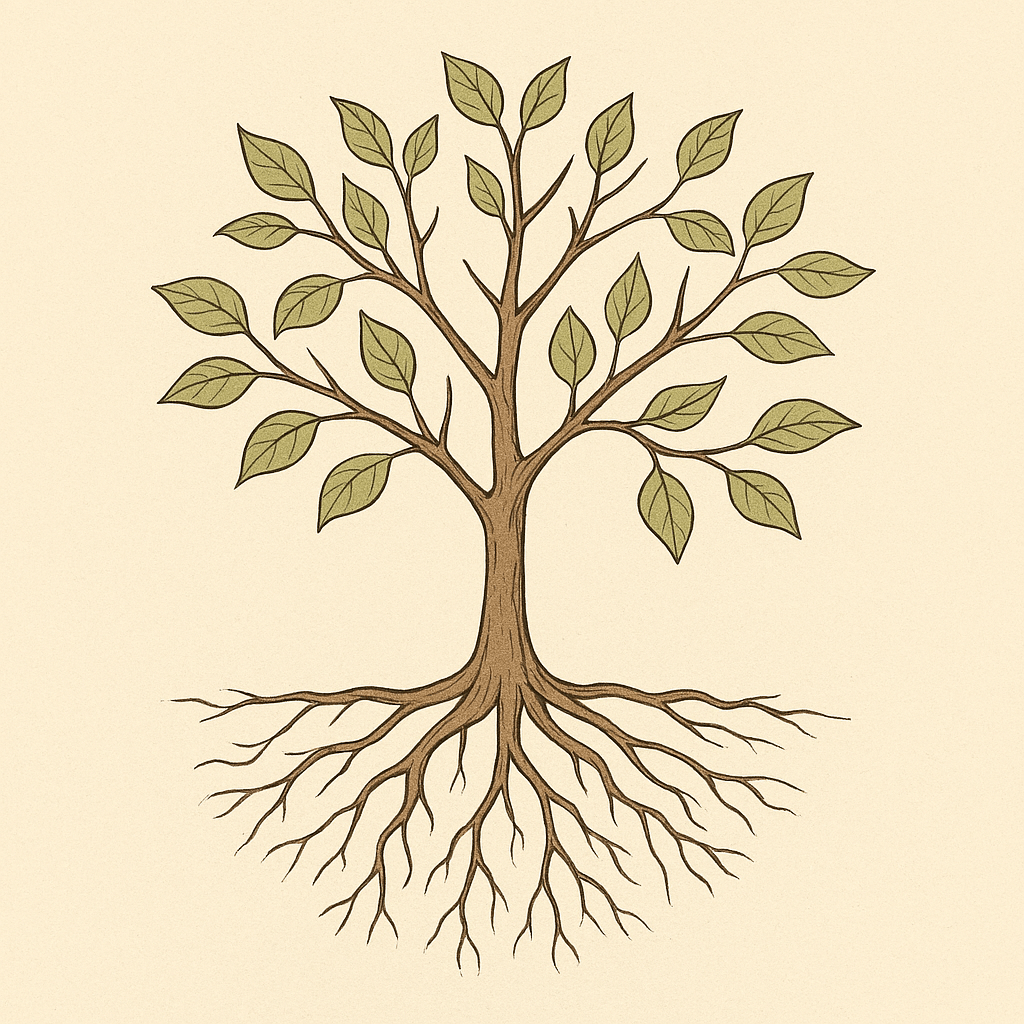
It helps to picture this taxonomy of knowledge as a tree. Seen in midsummer, the sheer number of leaves on any tree can be overwhelming and might appear random as the leaves orient themselves to sunlight, move in the breeze, and display different stages of growth in their life cycle. In this picture, the leaves are the tactics or techniques the tree uses to support and sustain its life. When we look at the twigs where the leaves are connected, we would see how their arrangement is not without order. The arrangement of the leaves follows the structure and shape of the twigs, just as tactics are clustered together into meaningful approaches through the organizing structure of strategies.
Looking more deeply into the structure of the tree, just as clusters of leaves are arranged according to the structure and placement of the twigs, we observe how twigs are not dispersed haphazardly on the tree. They are distributed according to the structure of larger branches that are themselves arranged in patterns. In this way, strategies are not random phenomenon but expressions of underlying principles that govern their arrangement.
The essential nature of the tree emerges from the original seed as it breaks its shell and begins growing upward and downward, patterning the entire structure of the tree through the anchoring form of the trunk, the main root, and the root system. That essential foundation supports and guides the growth of branch, twig, and leaf.
Most people intuitively understand the relationship between tactics (techniques), strategies (approaches), and principles. In the case of trees, these are the most visible parts, that things that catch our eye and give shape to the familiar structures of different trees: the billowing canopy of the oak tree, the elegant repose of the weeping willow, the angular stature of the white pine. However, just as the foundational reality of the exposed trunk along with the hidden root structures are hard to fully picture, the relationship between principles and essence is not always straightforward to grasp. It can be helpful to understand that principles describe patterns, while essence describes why those patterns exist at all. Stated a different way, principles explain how reality operates, whereas essence explains why reality exists and what it is for.
At a time when people have unprecedented access to information but are suffering in greater numbers than ever before, the taxonomy of knowledge points the way toward understanding the mental health paradox. More than just a useful tool for better understanding the structure of complex things, it can function as an organizing force that helps us determine the kind of information we need in order to achieve the hope of deep, enduring healing.
Let us know what you think in the comments!