



My Strange, Humbling, Wonderful Job
I work as a Clinical Psychologist. When people ask me what exactly a Clinical Psychologist does, I sometimes tell them I am a Retail Psychologist.
I sit in a room in a clinic five out of six working days every week and meet with the folks who show up. I listen as they tell me about their lives and their problems. Like you and me and all human beings, my patients have lives filled with all the things you would imagine: victories minor and grand, moments routine and sublime, bitter resentments, and unspeakable shame.
My formal job description is to diagnose and treat mental disorders. So, along with listening, I endeavor to communicate back to these people as accurately as I can what I observe as the problematic patterns and habits that are likely causing them distress. I point them toward new, more helpful practices, then I encourage, exhort, persuade, and cajole them, seeking to motivate them to try these things.
Many don’t, but some do. They try these things out, running experiments in their own lives, collecting the data. They bring this information back into the lab—the therapy room—and together we analyze it, tweaking it until the new things fix the old problems, improving their lives.
In my years of doing this full time, I have sat with thousands of people. Since graduate school, I have specialized in trauma recovery. As a result, most of the patients I have met had survived an episode or a series of events that had changed the direction and meaning of their lives forever, and not for the better.
Each and every one of these patients took the courageous risk of allowing a stranger into their life. They shared their hidden fears, injuries, and regrets. They confessed their flaws and failures. In quiet voices, they dared to speak about their most private aspirations and dreams. They held on to the slimmest hope that, by engaging in therapy, they might ease their burden and transcend their pain.
Every person’s life story is unique to them and deserves to be heard and acknowledged on its own. Yet, every unique story is also recognizable, because each story is the lived experience of a real person. Whatever the personal circumstances, every one of the individual stories I have heard contains the same conflicts and themes that have been reflected in the epic tales of human civilization since the dawn of storytelling. These timeless tales weave together the personal stories of billions of main characters into an unbroken narrative about the human experience.
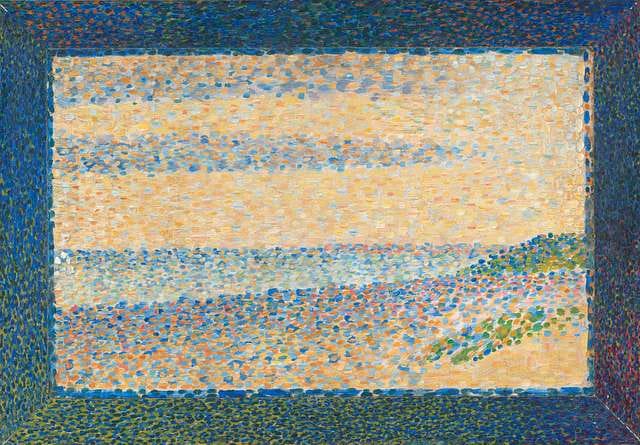
Seascape (Gravelines), Georges Seurat, 1890
Royalty-free image from picryl.com
Our unique, individual stories somehow all fit together, but not with monochromatic unity. Every person’s story is a unique point of color, complete in itself, but combining to form a larger picture of the human journey. This relationship of the individual narrative to the shared story suggests to me the work of master painters like George Seurat, who painstakingly arranged singular points of color into compositions of breathtaking beauty. The discordant melodies of our personal tragedies become the interacting themes and harmonies of the collective human symphony.
If it weren’t for these shared patterns, there would be no literature, no arts, no culture. If we could not see and decode these patterns, there would be no field of Psychology, only idiosyncratic advice.
These shared patterns are not random coincidence or an interesting artifact. They are the actual maps that can guide us in our own healing journey. They are the evidence that we are not all alone and that we are not unknown.
They reassure us that, no matter what has happened in our life, we are all built to heal.
Let us know what you think in the comments!
You might also like...
Created with ©systeme.io